A roof that blocks Delhi’s summer heat is not automatically prepared for humid air, condensation, wind-driven rain, and wet-season maintenance. By the end, you will be able to compare bubble foil with bulk insulation, choose the correct roof position, specify the air gaps and detailing, and identify when a different assembly is the safer choice.
Key takeaways
- Face bubble foil toward an air gap to reflect radiant summer heat.
- Seal laps, edges and penetrations to stop monsoon-driven water and vapour paths.
- Choose mineral wool or rigid boards when you need substantial conductive insulation.
- Inspect foil continuity, fasteners, roof sheets and drainage before monsoon.
What changes between Delhi’s summer and monsoon roof conditions?
A Delhi metal roof faces two different problems: solar gain in summer and moisture movement during monsoon. Bubble insulation for summer and monsoon roofs in Delhi must therefore be specified by function, not by its shiny appearance.
| Season | Main roof problem | Realistic bubble-foil contribution |
|---|---|---|
| Summer | Solar radiation through the roof | Reduces radiant transfer across a continuous air space |
| Monsoon | Humid air, condensation and rain exposure | Adds vapour control when continuously sealed; does not stop rain |
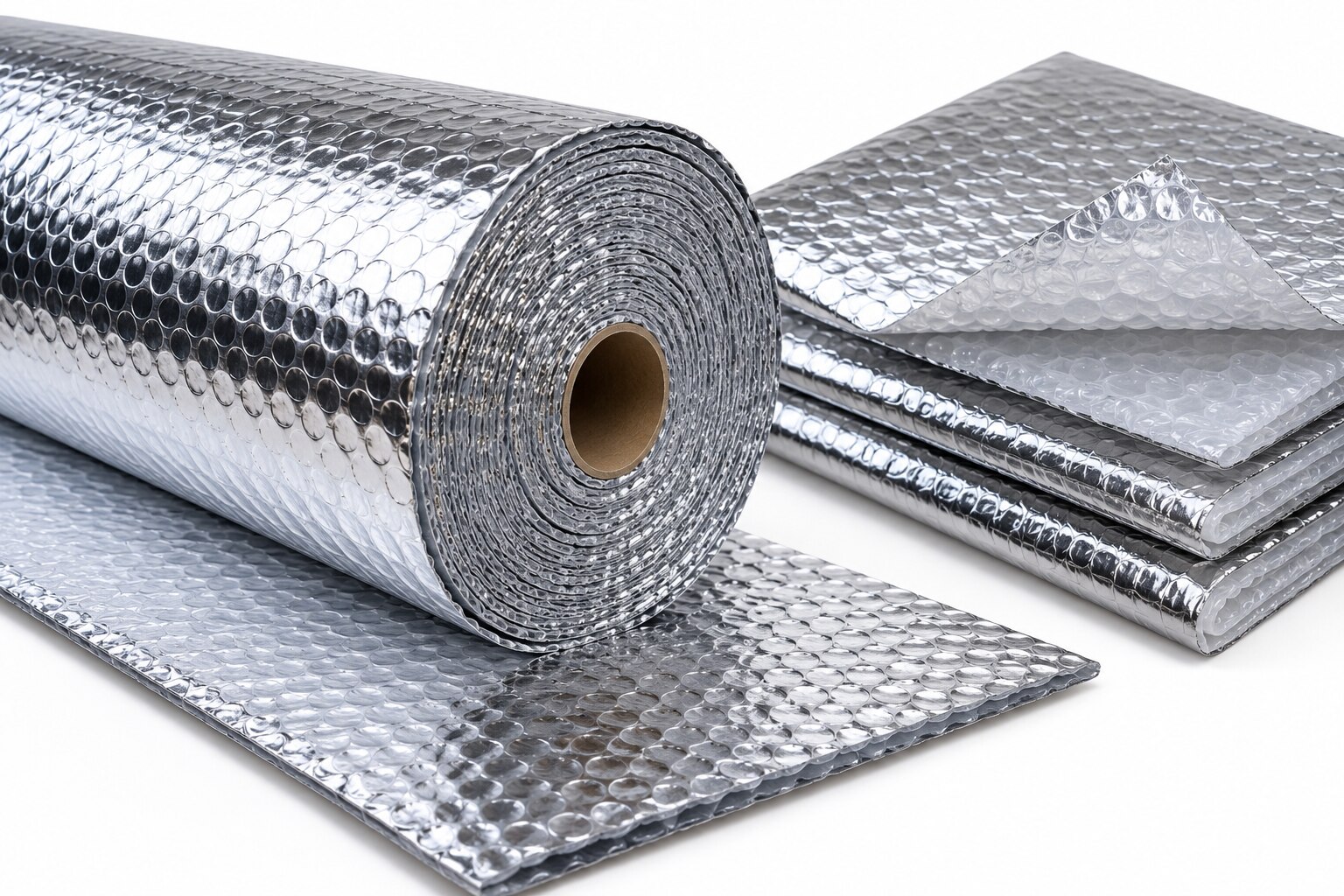
For bubble insulation for summer roofs in Delhi, performance depends on a low-emissivity foil face beside an unobstructed air space. A dark sheet still absorbs solar energy; the foil only reduces radiant transfer from that hot sheet across the cavity.
A clean, light-coloured or reflective external sheet, a ventilated cavity, and an unblocked foil face improve the result. The thin polymer bubble layer does not provide the same thermal resistance as mineral wool, glass wool, EPS, XPS, PIR, or polyurethane boards.
During monsoon, check humid indoor air, condensation on cold metal, wind-driven rain, blocked drainage, and moisture trapped against purlins or fasteners. Separate solar-heat control, rainwater control, and condensation control in the specification. Bubble foil can assist the first and vapour control; roof sheets, flashings, sealants, gutters, and drainage remain the water-control system.
That distinction defines roof insulation for weather in Delhi.
Where should bubble foil sit in a Delhi roof assembly?
Use bubble foil insulation in Delhi as a positioned layer within a tested roof assembly, not as loose material above a ceiling. For bubble insulation for summer roofs in Delhi, the reflective face needs its specified air gap; direct contact with hot metal removes much of its radiant-barrier benefit.
1. Keep the roof sheet and flashings on the outside. Form a continuous, supported cavity below them, then install the foil taut without sagging, followed by the ceiling or internal lining.
2. Fix the foil between framing members only when the support spacing, tensioning method and air gap match the installation drawing. Do not compress the bubble core, clamp it tightly between layers, or cover the reflective face with material that removes the adjacent air space.
3. Treat purlins and screws as thermal bridges. Detail overlaps, supports and penetrations so the foil remains continuous, and leave access for inspection rather than sealing it permanently behind an unserviceable lining.
4. Where a ceiling is present, place mineral wool, glass wool or rigid board between or below framing when you need greater conductive resistance. Use bubble foil above the ceiling or inside a composite build-up only when the complete assembly has been tested in that position.
The correct choice for bubble foil insulation in Delhi is the assembly’s tested thermal resistance for the actual heat-flow direction—upward, downward or horizontal—not the roll’s isolated R-value. A purlin-rich roof with poorly supported foil can perform worse than its label suggests.
How should laps, edges and penetrations be detailed for the monsoon?
Set a project-specific minimum lap width on the installation drawing; use 100 mm only when the tested product system permits it. The drawing must name the approved aluminium foil tape, butyl tape, or compatible sealant by manufacturer and grade—ordinary duct tape will not preserve vapour continuity.
1. Lay the foil without sagging onto a wet roof sheet, and seal every lap continuously. Mechanically secure the joint where wind uplift, movement, or the manufacturer’s instructions require it.
2. Seal or mechanically secure cut edges, screw penetrations, service openings, ridge lines, eaves, roof edges, skylights, vents, and pipe or cable penetrations. Specify the repair method for tears and fastener holes before installation.
3. Keep drainage paths open. Maintain the designed ridge or eaves ventilation, support the material above wet sheets, and prevent laps or loose edges from blocking a ventilated cavity.
4. Treat bubble insulation for monsoon roofs in Delhi as vapour-control material only when its stated vapour-permeance class or test result and sealed detailing support that use.
Bubble insulation for summer and monsoon roofs in Delhi is not a waterproofing membrane: it cannot replace roof sheets, flashing upstands, gutters, downpipes, sealants, or a drained cavity against ponding and wind-driven rain.
5. Record the installation drawing, compatible products, and the permitted UV exposure limit during construction. Inspect after the first heavy rains for wet spots, displaced laps, failed tape, corrosion at cut edges, and blocked eaves or ridge ventilation.
How does bubble insulation compare with mineral wool and rigid boards?
Bubble foil earns its place when roof depth, loading, or installation time is tightly limited; bulk insulation is more dependable when you need substantial conductive resistance, sound control, or robust fire performance. For roof insulation for weather in Delhi, compare the complete assembly, not a roll’s headline R-value.
| Option | Thermal resistance and geometry | Bridging, fire and acoustic performance | Moisture, durability and installation |
|---|---|---|---|
| Bubble foil | Thin and light; performance depends on declared low foil emissivity and a clean, continuous air gap beside the reflective face | Purlins and fasteners still bridge the layer; an aluminium-looking face is not non-combustible; weak sound attenuation | Resists water contact only as specified; dust, tears, sagging and compressed bubbles reduce performance; quick to handle |
| Mineral wool or glass wool | Bulk resistance depends on installed thickness, density and supported fit | Better sound attenuation and established fire options; gaps, compression and framing bridges reduce results | Needs support and protection from wetting; slower, heavier installation |
| EPS or XPS board | Board-based resistance at defined thickness; joints and edges need tight fitting | Requires joint, fastener and fire detailing; XPS handles moisture exposure better than EPS | Rigid and durable when detailed correctly; vulnerable joints or exposed edges cause failures |
| PIR or polyisocyanurate | High resistance at limited thickness | Joints, fasteners, fire classification and roof compatibility control performance | Needs accurate cutting, sealing and protection; installation is less forgiving |
Anyone comparing bubble foil insulation in Delhi should request tested assembly results, including heat-flow direction, foil emissivity, air-gap size and thermal bridging. Ask for airborne-sound and rain-noise data near traffic, factories, or heavy rain, plus the product and assembly fire classification.
What should you specify, inspect and buy for Delhi service?
Rank bubble foil insulation in Delhi by its declared performance, not its appearance. Require foil emissivity, bubble-core construction, overall thickness, tensile and tear properties, vapour permeance, fire classification, temperature limits, UV exposure limit during construction, compatible tapes and sealants, and tested thermal resistance for the proposed roof assembly.
1. Reject comparisons based only on “double-sided foil”, “air-bubble”, roll thickness, or an R-value without its test configuration and heat-flow direction. Ask whether the result represents downward, horizontal, or upward heat flow, and whether it includes purlins, fasteners, joints and the specified air gap.
2. Put support spacing, air-gap dimension, minimum lap width, sealing method, fastener treatment, ridge and eaves details, and the repair procedure on the installation drawing. This prevents sagging, open laps and foil contact with a wet sheet.
3. After the monsoon, inspect for wet insulation, failed joints, displaced material, corrosion at cut edges and blocked drainage or ventilation. Repair the roof cause before replacing insulation.
Metroshine Steel is useful when the decision must coordinate insulation with metal roofing, cladding, flashings and construction fasteners; ask for the complete roof build-up rather than treating a roll as a standalone product. The final comparison must show summer radiant-heat control, monsoon moisture management, fire and acoustic compliance, and continued access for inspection.
Related product
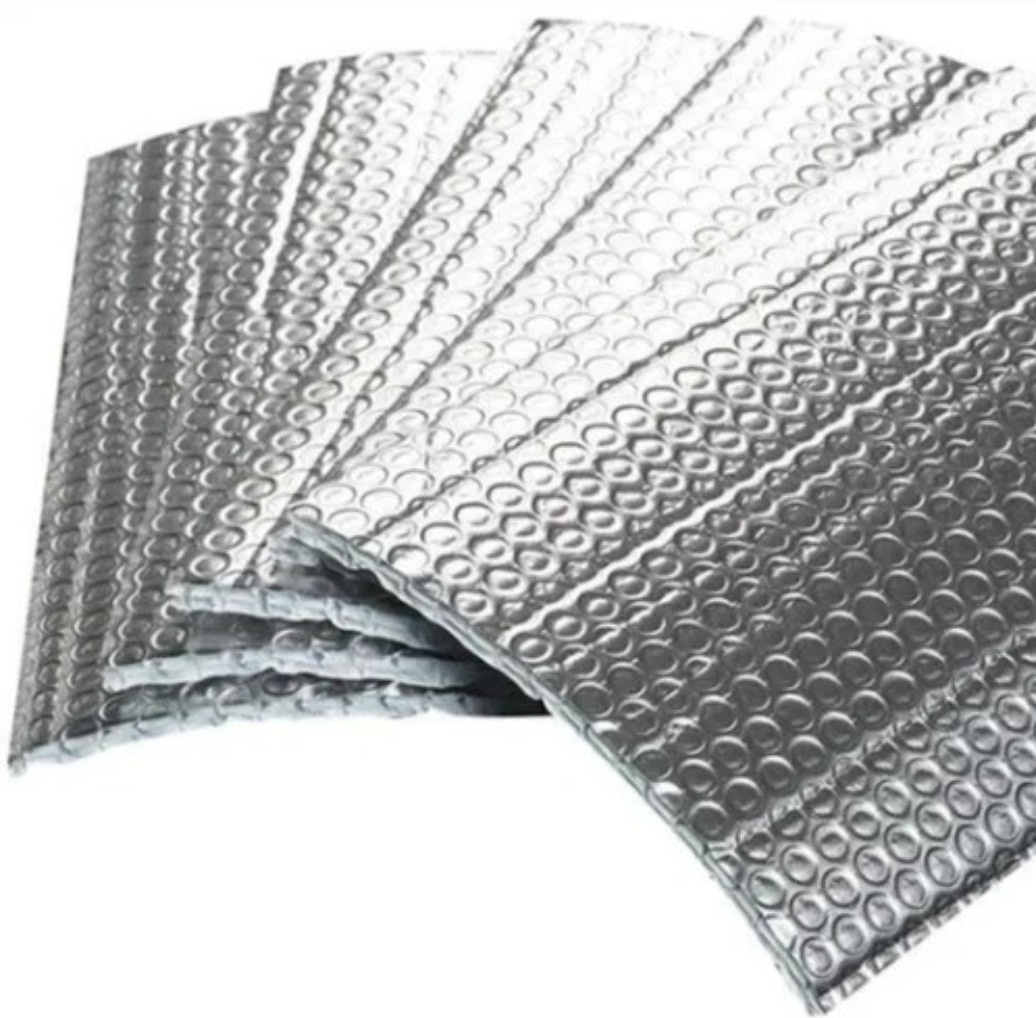 | Bubble Insulation Bubble Insulation is a lightweight and effective insulation material designed to provide thermal protection and reduce heat transfer. View product → |
Frequently asked questions
What changes between Delhi’s summer and monsoon roof conditions?
Summer roof design focuses on reducing solar heat gain from hot metal sheets. Monsoon design adds water management, sealed penetrations, controlled vapour movement and protection against wind-driven rain.
Where should bubble foil sit in a Delhi roof assembly?
Install bubble foil beside a continuous air gap, with its reflective surface facing that gap. Do not compress it between materials or treat it as a substitute for thick thermal insulation.
How should bubble insulation laps, edges and penetrations be detailed for the monsoon?
Overlap and tape the foil according to the product instructions, seal perimeter edges, and use compatible flashing or sealing components around screws, rooflights, vents and service penetrations.
How does bubble insulation compare with mineral wool and rigid boards?
Bubble foil works mainly by reducing radiant heat transfer across an air space. Mineral wool and rigid boards provide more substantial resistance to conductive heat flow, but require different support, thickness, fire and moisture detailing.
Keywords