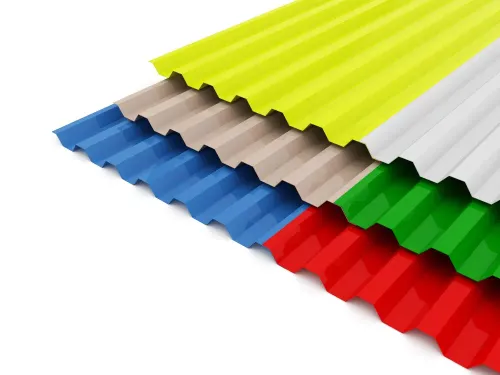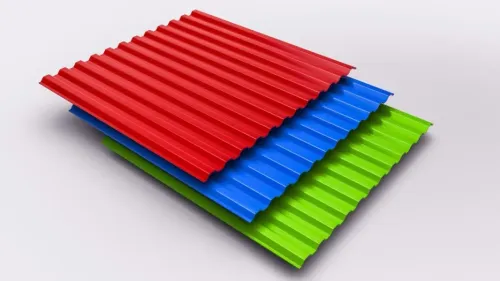
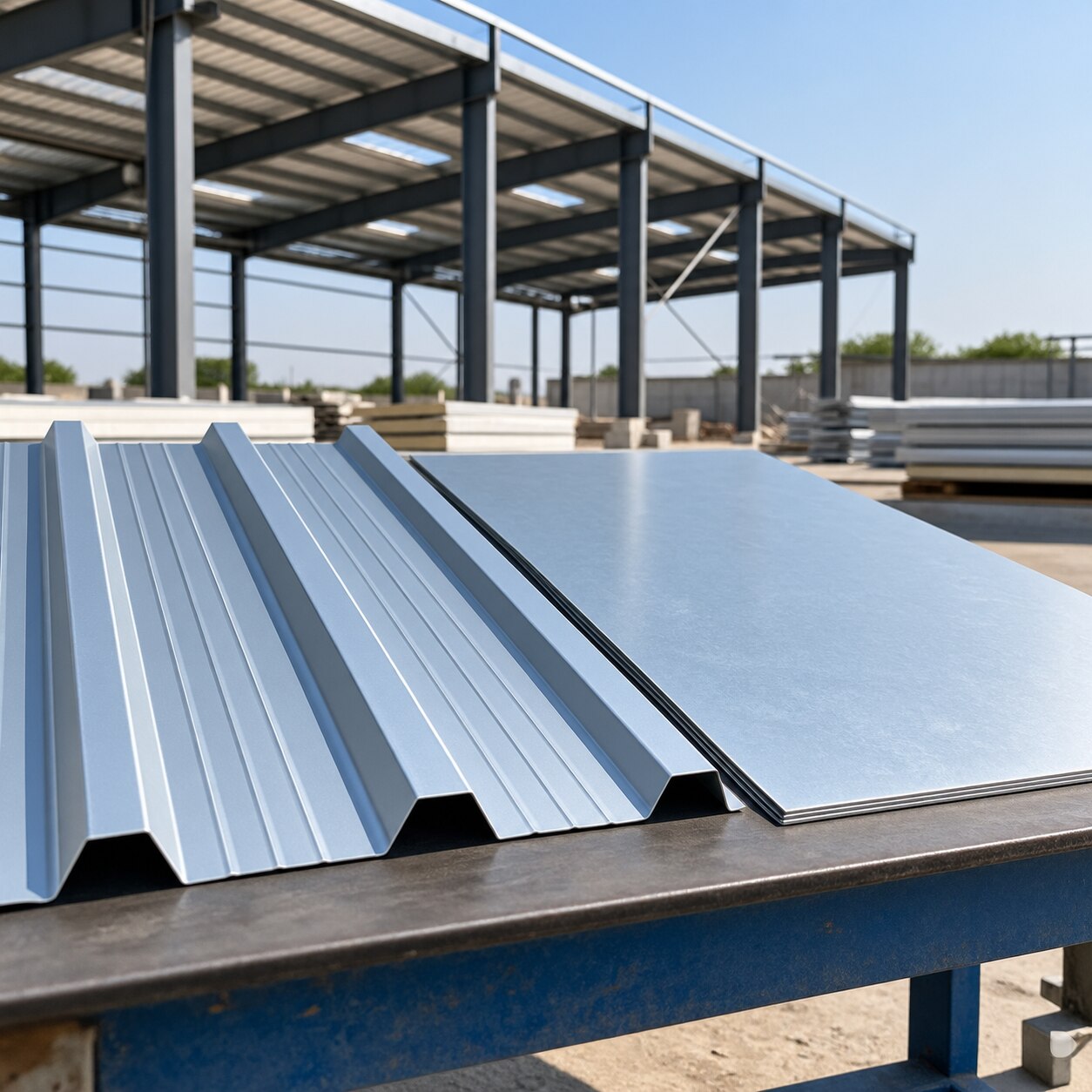
A ribbed sheet and a flat sheet cannot be compared by purchase price or thickness alone: rib geometry, support spacing, laps, fasteners, coatings, and installation labour change the result. By the end, you will be able to match each sheet to the roof or fabricated component, check a quotation, and compare the complete installed system for Delhi conditions.
Key takeaways
- Choose baby rib sheets for wider spans, restricted deflection or widely spaced purlins.
- Calculate effective cover width, side laps and end laps before ordering sheets.
- Verify thickness, coating, profile, fastener type and supplier documents before delivery.
- Use correct washered fasteners, sealed laps and aligned purlins to prevent leaks.
How rib geometry changes roof performance
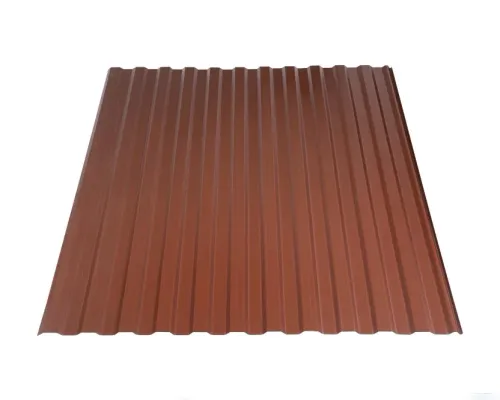
A baby rib sheet usually gives the stronger and more economical roof system when the span is wider, deflection is restricted, or purlins are widely spaced.
Its formed ribs increase section depth and geometric stiffness, while a plain sheet has little out-of-plane resistance and can oil-can, sag, or buckle unless it receives closer support or added stiffeners.
To compare baby rib and plain sheets, assess the complete design rather than thickness alone:
| Option | Span and deflection | Purlin spacing | Wind uplift and cost |
|---|---|---|---|
| Baby rib sheet | Greater bending resistance and better control of visible sag, subject to profile and steel grade | Can support wider spacing when the manufacturer’s span tables permit it | Better roof-area economy when reduced framing and faster installation offset the higher sheet price |
| Plain sheet | Shorter practical spans and greater deflection risk under maintenance or wind load | Usually needs closer purlins, rails, or stiffeners | Lower sheet cost can disappear through extra steel, laps, labour, and handling damage |
Wind uplift can govern before gravity loading. Check the project wind pressure and roof-zone coefficients under IS 875 Part 3; edge and corner zones need particular attention because uplift is higher there. Fastener quantity and purlin fixing must follow the design, not a generic spacing rule.
A baby rib profile is not automatically leak-free or structurally adequate. Verify base-metal thickness, steel grade, effective cover width, rib geometry, end-lap support, fastener positions, and deflection limits before pricing; compare total installed cost per roof area, not price per kilogram.
Where baby rib and plain sheets fit in a contractor’s work
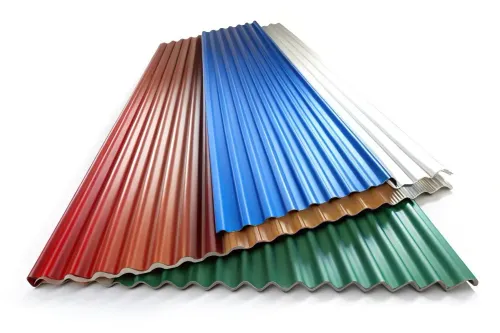
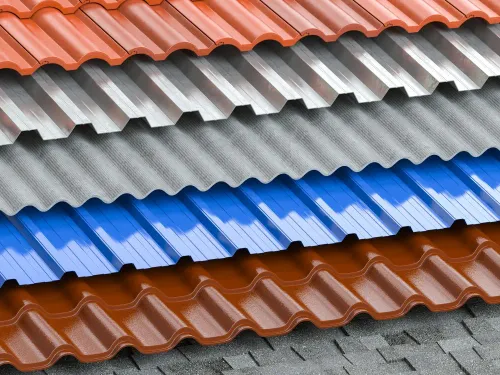
A baby rib sheet belongs on a roof or wall when the supporting design needs a profiled, weatherproof panel with useful spanning stiffness. The ribs reduce deflection and handling damage across purlins or wall rails; a plain sheet needs closer restraint, added stiffeners, or a different substrate to avoid sagging and wind deformation.
Use the practical question—baby rib sheet or plain sheet for contractors—to match the sheet to the component:
| Application | Better fit | Reason |
|---|---|---|
| Roof covering | Baby rib sheet | Ribs provide stiffness across designed purlin spacing and support side-lap sealing. |
| External wall cladding | Baby rib sheet | The profile improves resistance to wind pressure and keeps broad panels flatter. |
| Wall liner or partition | Either | Choose baby rib for a more rigid panel; choose plain sheet where close framing already controls movement. |
| Flashing, closure, gutter, or trim | Plain sheet | A flat surface folds, cuts, and shapes cleanly around junctions. |
| Curved work, small canopies, or fabricated components | Plain sheet | Flat material suits bending, folding, and small-piece fabrication. |
| Large unsupported roof areas | Plain sheet only with engineered restraint | Without close support, it can oil-can, pond water, or deform under wind. |
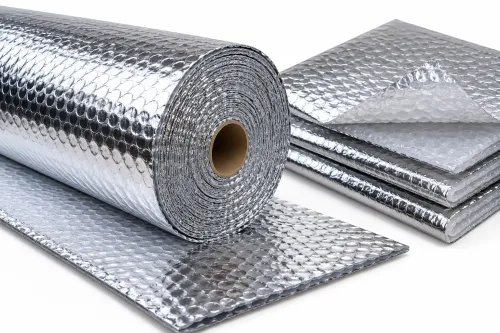
Plain roofing sheets for contractors remain the better choice when fabrication accuracy matters more than open-span stiffness. Do not treat either profile as insulation: condensation still requires insulation, vapour control where specified, ventilation, and drainage. For every roof, compare the complete installed system, not the sheet price alone.
Compare cover width, laps, wastage, and installation time
Compare installed square-metre cost, not purchase price per kilogram: a plain sheet can lose its apparent saving through closer purlins, extra stiffeners, more joints, and slower installation.
| Option | Width, laps and length | Cost and labour effect |
|---|---|---|
| Baby rib | Price it on effective cover width, not overall width. Choose sheet length to minimise end laps and offcuts; include side laps, end laps, closures, and flashings. | Ribs can permit wider purlin spacing only where the manufacturer’s load table allows it. Fewer supports and faster coverage can offset closures and profile-specific handling. |
| Plain sheet | Net cover width still controls quantity. A short sheet creates end laps, while each side or end lap consumes coverage and adds sealant, fasteners, alignment, and leak-risk points. | No rib closures are needed, but broad roof areas may require closer purlins, stiffeners, or extra framing. Cutting and folding are convenient for small components, yet installation slows when the substrate needs more support. |
Ask for the section drawing, effective cover width, recommended sheet lengths, lap dimensions, and closure count before comparing quotations. A quote for baby rib roofing sheets in delhi that omits these figures cannot produce a reliable installed-cost comparison.
Measure wastage from the cutting plan, not a flat percentage: valleys, edges, penetrations, and short runs create offcuts. Add labour for carrying long sheets, aligning laps, fitting closures, sealing end laps, and correcting damaged coatings; a cheaper sheet becomes expensive when every joint takes longer.
What to specify and verify for Delhi projects
Before accepting either sheet on a Delhi site, verify the supplied steel, coating, structural design, quotation, and delivery condition against the project drawings—not against a product name.
For baby rib sheets versus plain sheets for roofing contractors in Delhi, request these documents and figures:
- Base-metal thickness (BMT), steel grade, coating designation, coating mass in g/m², paint system, colour, and manufacturer’s test certificate. Do not compare total coated thickness with BMT.
- The baby rib section drawing showing rib height, pitch, effective cover width, and hole locations; for plain sheets, obtain the permitted span, support spacing, and stiffener requirement.
- A load table covering the proposed purlin spacing, sheet length, deflection limit, maintenance load, and wind uplift under IS 875 Part 3. Check higher edge and corner-zone uplift separately.
- A line-item quotation for effective cover area, side and end laps, closures, flashings, screws and washers, wastage, unloading, installation labour, GST, warranty exclusions, and replacement terms.
- Delivery date, bundle weight, sheet lengths, packing method, batch numbers, and unloading responsibility. Reject bundles with wet storage staining, crushed ribs, exposed steel, or mismatched colours.
| Check | Baby rib | Plain |
|---|---|---|
| Structural evidence | Section drawing and load table | Support and stiffener design |
| Quantity basis | Effective cover width and laps | Net sheet area plus extra framing |
| Best verification | Rib damage and fastener alignment | Flatness, oil canning and edge damage |
Metroshine Steel can be asked to quote both options on this same installed-area basis, making the cheaper-looking sheet easier to test against the actual roof cost.
Related products
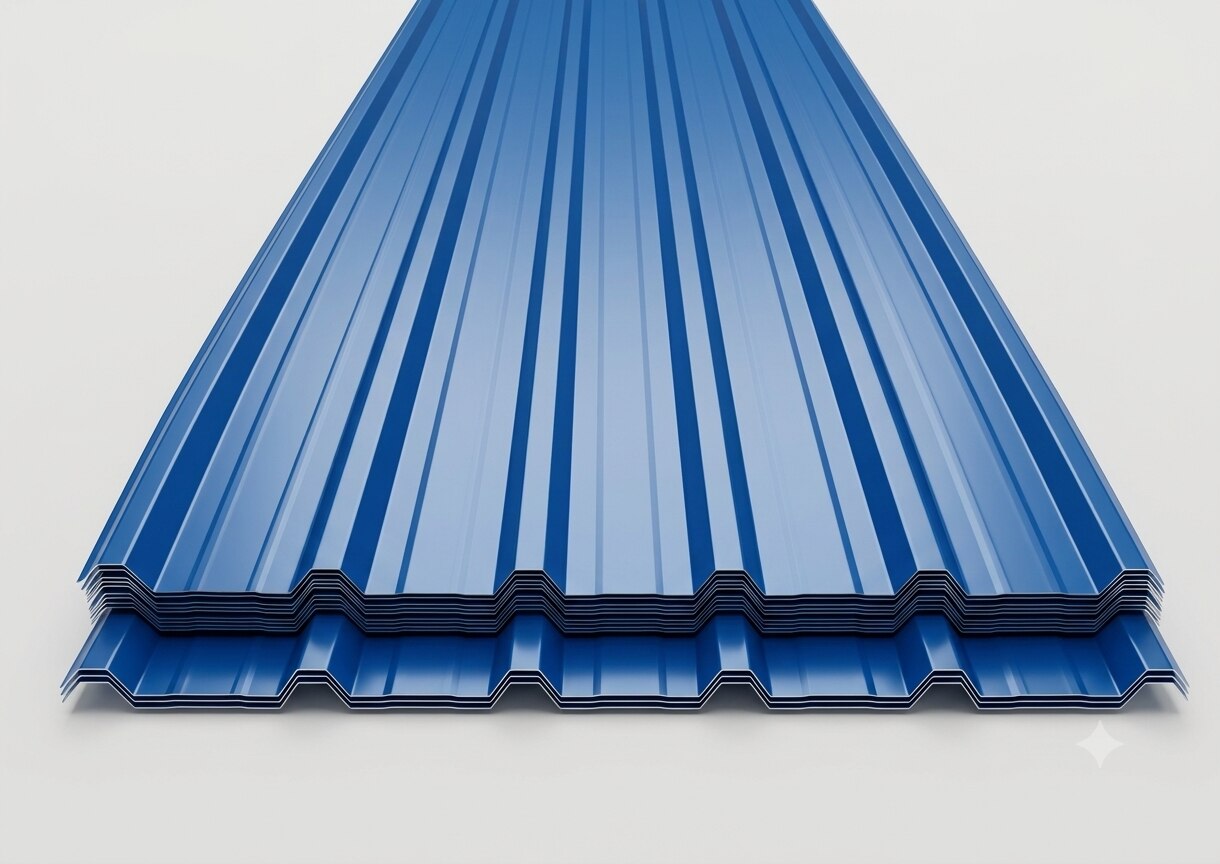 | Baby Rib Profile Sheet Baby Rib Profile is a lightweight and durable roofing/cladding sheet featuring narrow, closely spaced ribs that provide a clean and modern... View product → |
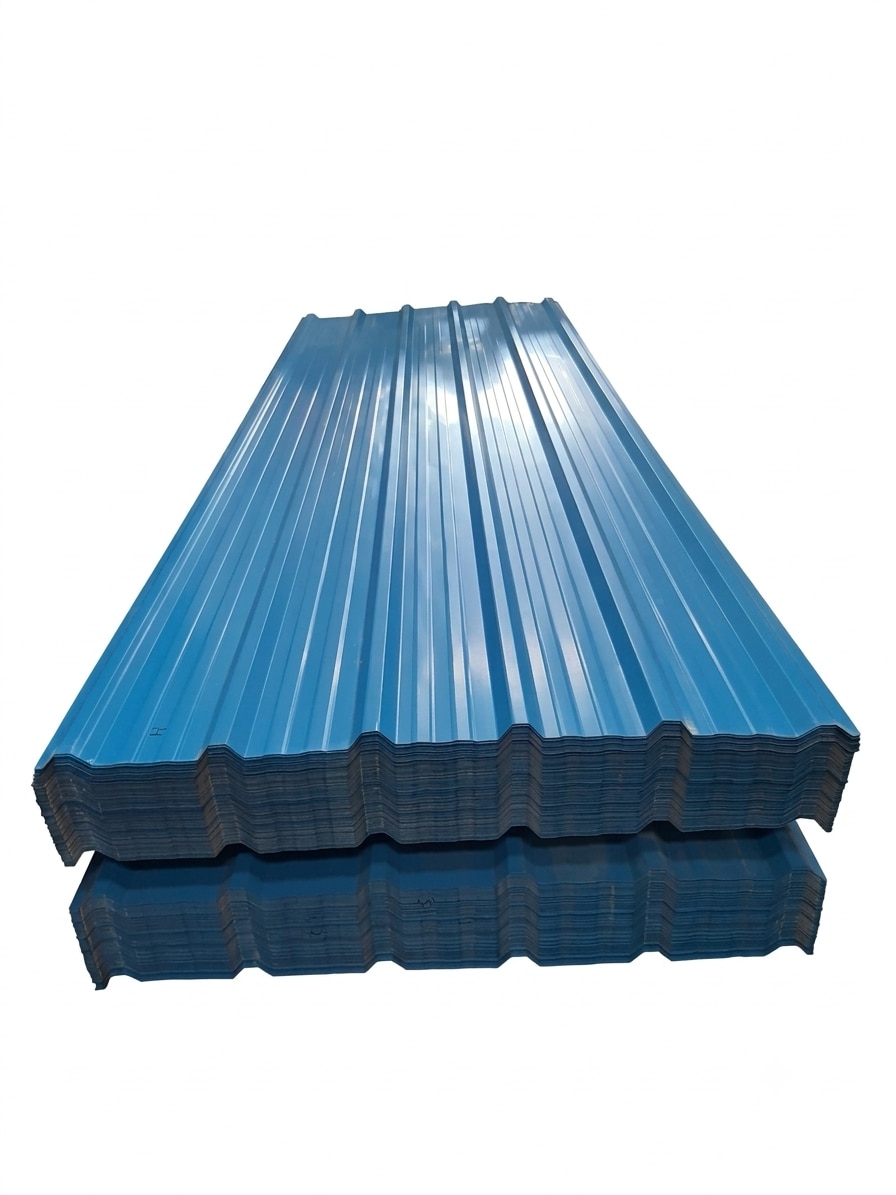 | Profile Sheet Profile Sheet is a durable and versatile roofing and wall-cladding material made from high-quality coated steel or metal. View product → |
How fasteners, laps, and site practice prevent leaks
A roof leaks when a good sheet is installed with the wrong fastener, crushed washer, open lap, or unsupported joint. The choice of baby rib sheet or plain sheet for contractors must include the complete fixing and lap arrangement, not only the sheet price.
Select and install each component against the supplier’s detail:
- Use corrosion-compatible self-drilling screws with an EPDM sealing washer. Match screw length to the support and lap stack; an overlong screw can leave exposed threads that collect water.
- Place roof fasteners at the profile locations specified for that sheet. Drive them perpendicular to the support, then stop at firm washer contact. Over-tightening dimples the sheet, splits the coating, and destroys the seal.
- Use stitch fasteners at side laps at the specified spacing. Do not substitute them for purlin fixings or place them where the washer bridges an unsupported rib.
- Keep side and end laps straight, clean, and fully supported. Fit the specified closure at openings; a displaced closure leaves a wind-driven path beneath the lap.
- Seal or detail end laps with the specified tape or sealant, never improvised adhesive. Follow the minimum roof pitch and lap length for the profile.
To compare baby rib and plain sheets, include screws, laps, closures, flashings, labour, and movement details in the same roof-area quotation. Long runs need the specified expansion arrangement: do not clamp every hole tightly or enlarge holes on site.
Walk only on purlins or designated boards, because a dented rib can damage its coating and leak.
Frequently asked questions
How does rib geometry change roof performance?
Ribs increase sheet stiffness and help control deflection compared with a flat plain sheet, subject to the specified thickness, span and support spacing.
When should contractors choose baby rib sheets over plain sheets?
Choose baby rib sheets when the roof has wider spans, restricted deflection limits or widely spaced purlins. Plain sheets fit shorter spans and simpler applications when the design permits them.
What should contractors compare before ordering sheets?
Compare effective cover width, side and end laps, sheet length, cutting wastage, number of fasteners and installation time—not only the nominal sheet width.
What should you verify for roofing projects in Delhi?
Verify the sheet thickness, steel grade, coating specification, profile dimensions, effective cover, fastener compatibility and supplier test or batch documents against the project specification.
How do fasteners, laps and site practice prevent leaks?
Use compatible washered fasteners at the specified locations, keep purlins aligned, install side and end laps correctly, seal required laps and remove swarf after drilling.
Related products
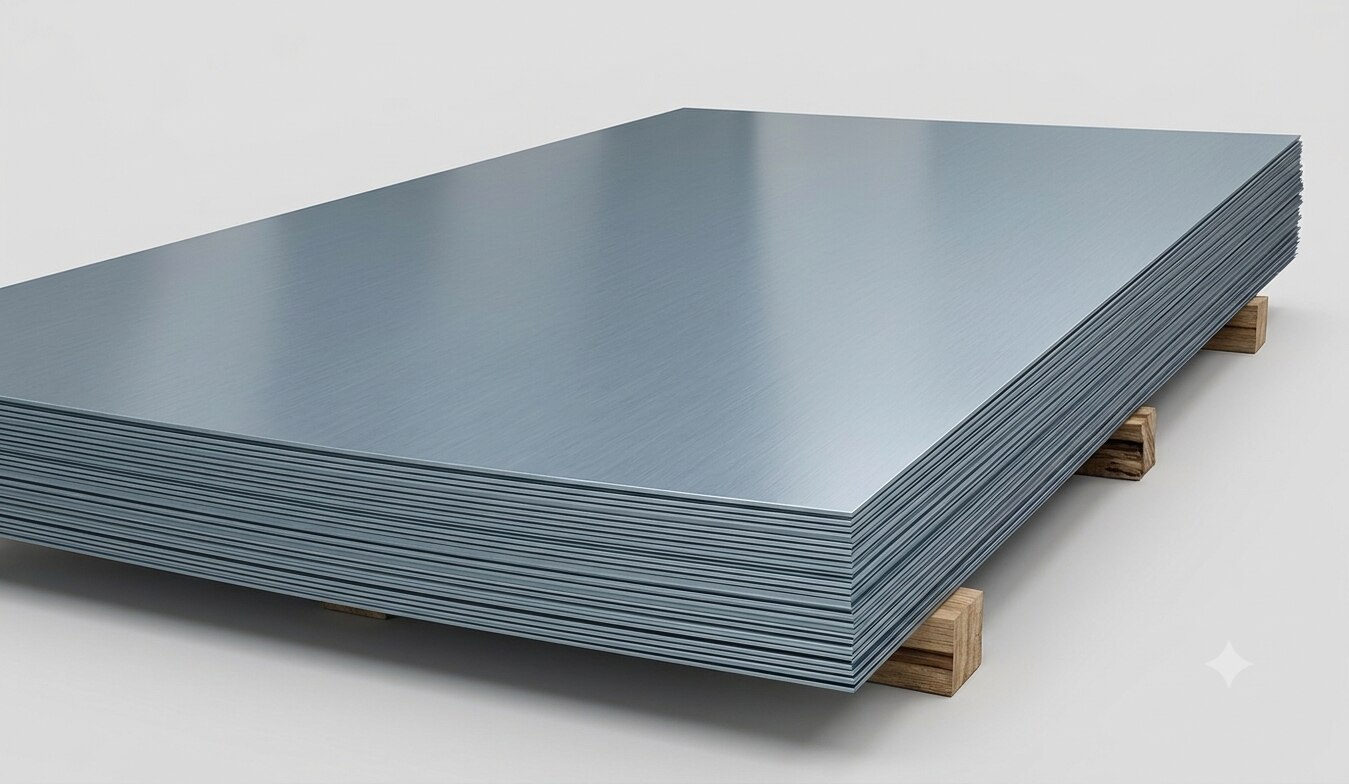 | Plain Sheet Plain Sheet is a smooth, flat metal sheet without any profile or corrugation. View product → |
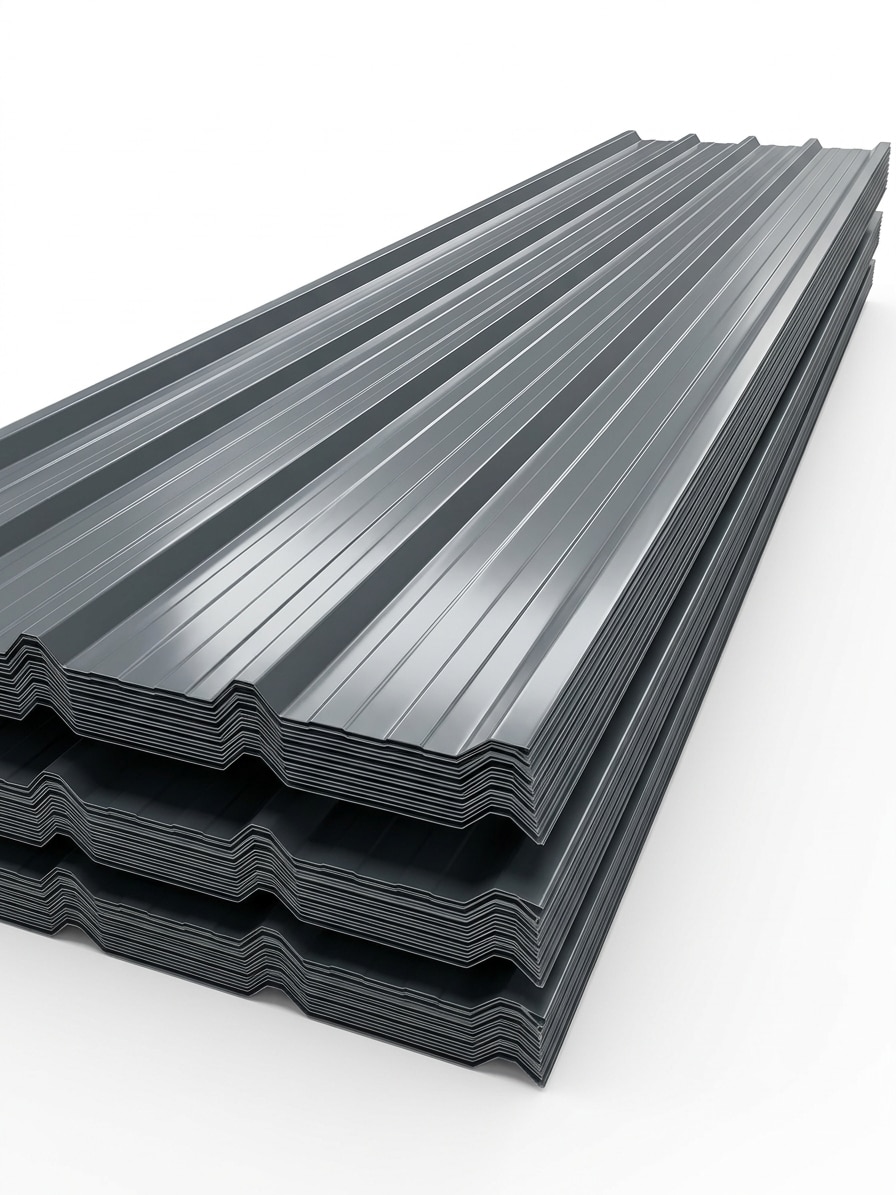 | Profile Sheet Standard Size Profile Sheets are durable roofing and cladding sheets designed for industrial, commercial, agricultural, and residential applications. View product → |
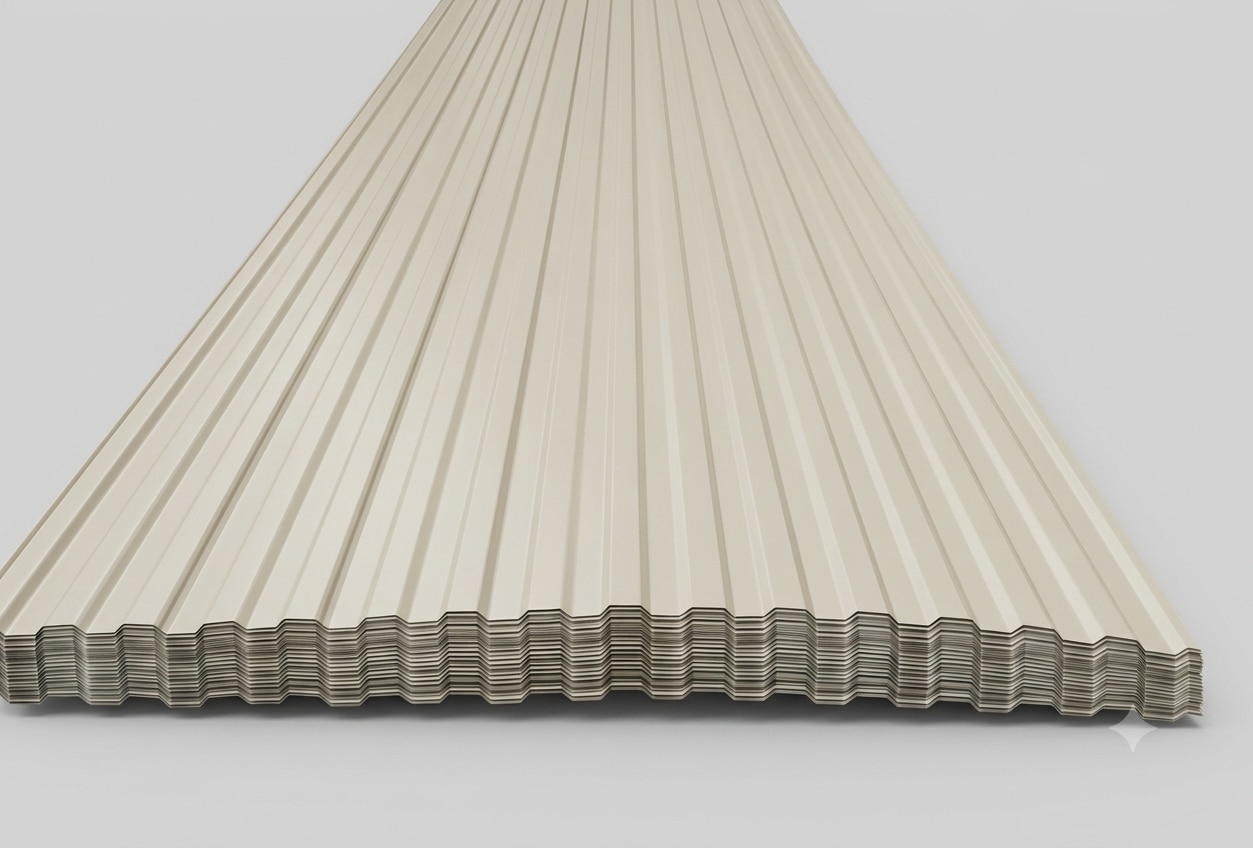 | Liner Sheet Liner Sheet is a lightweight and durable metal sheet designed for standing cladding, wall lining, and false ceiling applications. View product → |
 | Bubble Insulation Bubble Insulation is a lightweight and effective insulation material designed to provide thermal protection and reduce heat transfer. View product → |
Keywords